Guide
Oral Health Guide: Evidence-Based Daily Care, and Where Dentanol Fits
Good oral care rests on three habits. Brush twice a day for two minutes with fluoride toothpaste, clean between your teeth once a day, and see a dentist for regular cleanings. Watch for bleeding or swollen gums, loose teeth and bad breath that will not go away. A supplement such as Dentanol is at most an extra on top of that routine.
The basics
What does good daily oral care look like?
Daily oral care is simple and cheap. It takes about five minutes a day and a checkup schedule your dentist sets.
Public health agencies agree on the core habits. Brush twice daily, floss or clean between teeth every day, and get regular dental cleanings (CDC, Gum disease).
- A soft brush and a fluoride toothpaste, used morning and night.
- One daily pass between every pair of teeth.
- Dental visits on the schedule your dentist suggests.
- No tobacco, which is the biggest single risk for gum disease (NIDCR, Gum disease).
Gum disease is common. Roughly four in ten American adults aged 30 and older had periodontitis in national data from 2009 to 2014 (CDC, Gum disease). Many of them did not know it, because early gum disease is often painless.
Brushing
How should you brush, and how long should it take?
Brush for two full minutes, twice a day, with fluoride toothpaste. Replace the toothbrush or brush head every three to four months, or sooner if the bristles fray (ADA, Toothbrushes).
| Habit | How often | Tip |
|---|---|---|
| Brush with fluoride toothpaste | Twice a day, 2 minutes | Angle the bristles toward the gum line and use short strokes. |
| Clean between teeth | Once a day | Floss, small interdental brushes or a water flosser all count. |
| Replace the brush | Every 3 to 4 months | Sooner after an illness or if bristles splay. |
| Dental checkup and cleaning | As your dentist advises | Cleanings remove hardened tartar that brushing cannot. |
| Limit sugary snacks and drinks | Every day | Frequent sipping keeps teeth bathed in sugar for longer. |
A timer or an electric brush with a built-in timer helps. Most people stop well short of two minutes when they guess.
Fluoride
Why does fluoride toothpaste matter so much?
Fluoride helps prevent cavities in both children and adults. It also helps repair early damage caused by mouth bacteria before a cavity forms (CDC, Fluoride).
The American Dental Association suggests a toothpaste that carries its Seal of Acceptance and contains fluoride (ADA MouthHealthy, Brushing). The seal means the ADA reviewed the product's safety and effectiveness data.
After brushing, spit out the extra paste but skip the big rinse with water. That leaves a thin layer of fluoride on the teeth for longer.
Fluoride in tap water and in toothpaste work together. If you drink mostly bottled water, ask your dentist whether you need extra fluoride care.
Between teeth
How do you clean between your teeth each day?
Clean between your teeth once a day with any tool that reaches the gaps (ADA MouthHealthy, Brushing). A toothbrush misses those surfaces, and plaque there can irritate the gums.
String floss
Curve it into a C shape around each tooth and slide it just under the gum line. Use a fresh section for each gap.
Interdental brushes
Tiny brushes sized to fit between teeth. Many people with bridges, braces or larger gaps find them easier.
Water flossers and picks
Helpful for people with limited hand movement. Ask your hygienist which option fits your mouth best.
Some bleeding in the first days of new flossing can happen. If it keeps going after a week or two, treat it as a sign to see a dentist.
Breath and saliva
What causes bad breath and dry mouth?
Bad breath usually begins inside the mouth. Bacteria release sulfur compounds when brushing and flossing slip. Gum disease, cavities, some foods, smoking, dry mouth and certain medicines can also play a part (MedlinePlus, Breath odor).
Saliva matters more than most people think. It washes away bits of food and carries minerals that help fight tooth decay. Hundreds of common medicines can reduce it (NIDCR, Dry mouth).
Small steps that help a dry mouth
- Sip water through the day, especially with meals.
- Brush the tongue or use a tongue scraper once a day.
- Cut back on alcohol and tobacco, which dry the mouth further.
- Run a humidifier at night if you wake with a dry mouth.
Keep taking your prescribed medicine. Ask your doctor or pharmacist whether another option causes less dryness. For more on odor, read what causes bad breath.
Diabetes
How are diabetes and gum health linked?
The link runs both ways. Gum disease can be more severe in people with diabetes, and gum disease can make blood sugar harder to manage (CDC, Diabetes and oral health).
Tell your dentist, keep regular cleanings, and mention any gum bleeding to your diabetes care team as well.
Warning signs
Which signs mean you should see a dentist soon?
Red, swollen or bleeding gums, gums pulling away from teeth, loose teeth and bad breath that will not go away all need a dentist (NIDCR, Gum disease). None of these should wait for a supplement to work.
| What you notice | What it can point to | What to do |
|---|---|---|
| Gums bleed when you brush or floss | Gum inflammation | Book a dental visit |
| Gums look puffy, red or tender | Early or active gum disease | Book a dental visit |
| Teeth look longer or feel loose | Receding gums or bone loss | Call the dentist promptly |
| Breath odor that lasts despite good care | Gum disease, decay or another cause | Dentist first, then a doctor if needed |
| Tooth pain, swelling in the face or fever | Possible infection | Seek care the same day |
Early gum problems are easier to manage than late ones. A cleaning and an exam cost far less time than treating advanced disease.
Supplements
Where does a supplement like Dentanol fit in oral care?
A supplement like Dentanol fits last, after brushing, cleaning between teeth and dental visits. It is at most an extra, and it does not replace any of those steps.
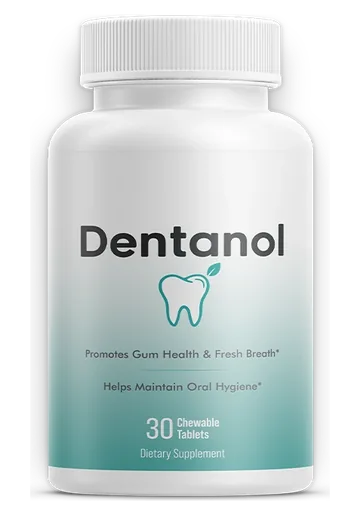
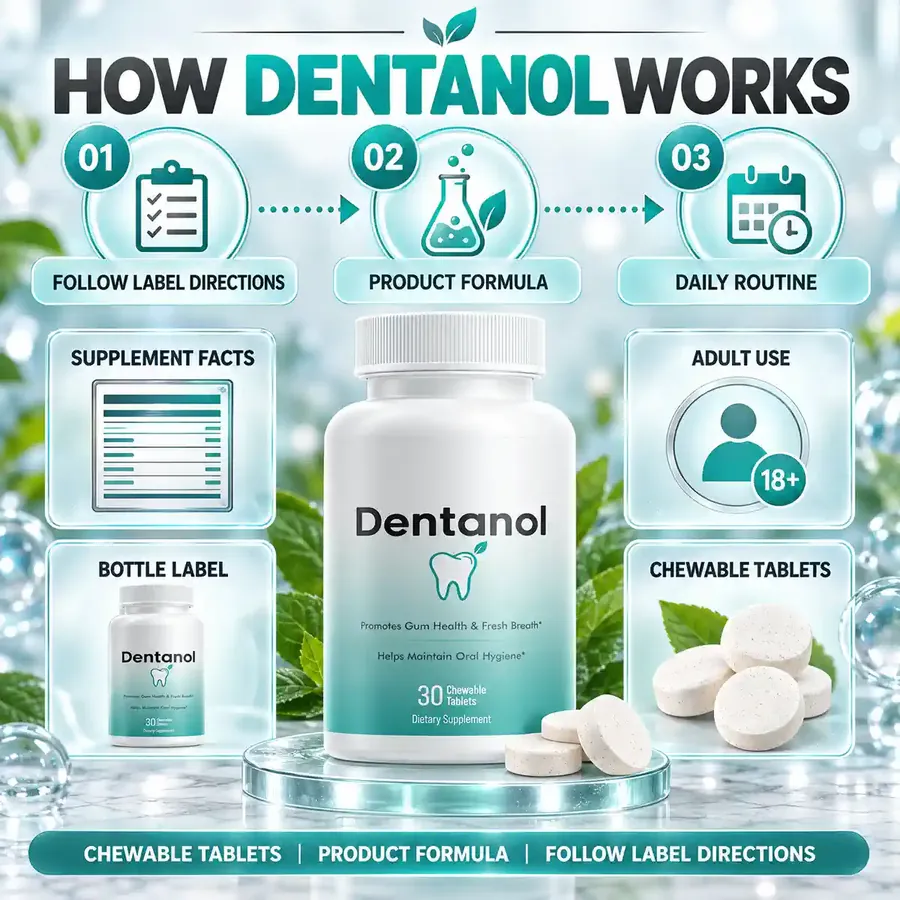
Dentanol is a chewable tablet sold 30 to a bottle. The label says it "Promotes Gum Health & Fresh Breath" and "Helps Maintain Oral Hygiene". Those claims come with the standard FDA statement, and no trial of Dentanol has been published.
The ingredient names and daily amount were not published either. If you still want to try it, follow the label and read how to use Dentanol first. To judge it against other products, use the dental supplement checklist.
Sources
Which sources does the oral health guide rely on?
Every health fact in the guide comes from a U.S. health agency or the American Dental Association. Each source is linked so you can check the wording yourself.
- Periodontal (Gum) Disease. National Institute of Dental and Craniofacial Research, 2026.An infection that inflames the tissues holding teeth in place. Signs include bleeding gums, receding gums, loose teeth and bad breath. Smoking is the biggest risk factor.
- About Periodontal (Gum) Disease. Centers for Disease Control and Prevention, 2024.About 4 in 10 U.S. adults 30 and older had periodontitis in 2009-2014. Brush twice daily, floss every day, get regular cleanings.
- Toothbrushes. American Dental Association, 2026.Brush twice a day for two minutes with fluoride toothpaste; replace the brush every three to four months.
- Brushing Your Teeth. American Dental Association (MouthHealthy), 2026.Use an ADA-accepted fluoride toothpaste and clean between teeth once a day.
- Breath Odor. MedlinePlus Medical Encyclopedia, 2026.Bacteria release sulfur compounds when brushing and flossing lapse; gum disease, cavities, foods, smoking and some medicines also cause bad breath.
- Dry Mouth. National Institute of Dental and Craniofacial Research, 2024.Hundreds of medicines reduce saliva. Saliva washes away food and carries minerals that help fight decay.
- About Fluoride. Centers for Disease Control and Prevention, 2023.Fluoride helps children and adults prevent cavities and repairs early damage from mouth bacteria.
- Oral Health and Diabetes. Centers for Disease Control and Prevention, 2024.Gum disease can be more severe with diabetes, and gum disease can make diabetes harder to manage.
The guide is general information for adults. For advice about your own teeth and gums, see a dentist. Product details are on the Supplement Facts page.
FAQ
Oral health guide FAQ
Is brushing once a day enough?
Twice a day for two minutes is the standard advice from the ADA. Night brushing matters because saliva flow drops while you sleep.
Is flossing better than an interdental brush?
Either one counts as cleaning between teeth. The best tool is the one you will use every day, so ask your hygienist which fits your gaps.
Can mouthwash take the place of flossing?
No. A rinse does not scrape plaque off the sides of teeth. It can be an extra, like any other add-on.
Does Dentanol replace toothpaste or dental visits?
No. Dentanol is a dietary supplement, and the guide places it after brushing, cleaning between teeth and checkups.
Why do my gums bleed when I floss?
Bleeding often points to gum inflammation. If it lasts more than a week or two of daily cleaning, see a dentist.
Can medicines cause bad breath?
Yes. Many medicines reduce saliva, and a dry mouth tends to smell. Ask your pharmacist before changing anything.
Keep reading
More about Dentanol
Choosing a supplement
Five checks for any oral-health supplement, plus an honest score for Dentanol on each one.
Read more
What causes bad breath?
Where bad breath comes from, why dry mouth matters, and how to read Dentanol's fresh breath claim.
Read moreHow to use
Label-first directions for the chewable tablets, where they fit in your routine, storage and the 60-day check.
Read moreU.S. stocking partner for Dentanol
Ready to try Dentanol with the 60-day guarantee?
Order through the stocking partner's page so your order ID is on file with the refund desk. 1 bottle is $69 plus $9.99 shipping; the 6-bottle pack works out to $49 a bottle.
Questions before you buy? Call +1 (302) 200-3480. 60-day money-back guarantee, return shipping paid by the buyer.