Blog
What Causes Bad Breath, and What Can Dentanol's Label Tell You?
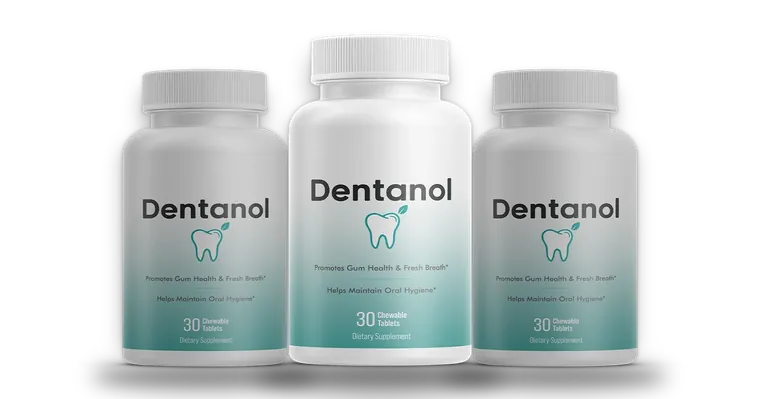
Most bad breath starts in the mouth. Bacteria left behind when brushing and flossing slip release smelly sulfur compounds. Gum disease, cavities, strong foods, smoking, dry mouth and some medicines add to it. Dentanol's bottle says "Promotes Gum Health & Fresh Breath", but that is a label claim with no published ingredients. Breath that stays bad needs a dentist.
The basics
What causes bad breath most of the time?
Most bad breath comes from bacteria in the mouth. When brushing and flossing slip, bacteria feed on bits of food and give off sulfur compounds that smell (MedlinePlus, Breath odor).
Those bacteria collect in three main places: along the gum line, between teeth and on the back of the tongue. All three are spots a quick rinse or a mint does not reach.
Other common causes, according to MedlinePlus, include (MedlinePlus, Breath odor):
- Gum disease and cavities
- Strong foods such as garlic and onions
- Smoking and other tobacco
- Dry mouth
- Some medicines
Cause by cause
Which bad breath causes can you fix at home?
Some causes clear up with better habits. Others need a dentist or doctor.
| Cause | What is going on | First step |
|---|---|---|
| Missed brushing or flossing | Bacteria build up and release sulfur gases | Brush twice a day and clean between teeth daily |
| Garlic, onions, strong spices | Odors pass into the breath after eating | Usually fades on its own within a day |
| Smoking or tobacco | Leaves its own smell and raises gum disease risk | Ask your doctor about quitting help |
| Dry mouth | Less saliva to wash food and bacteria away | Sip water; ask whether a medicine is the cause |
| Gum disease | Infection around the teeth | See a dentist |
| Cavities | Decay traps food and bacteria | See a dentist |
Dry mouth
How does dry mouth lead to bad breath?
Saliva is the mouth's own rinse. It washes away food and carries minerals that help teeth fight decay (NIDCR, Dry mouth). When there is less of it, food and bacteria stay put, and odor builds.
Medicines are a big reason. The NIDCR says hundreds of medicines can reduce saliva (NIDCR, Dry mouth). Breathing through your mouth at night can also leave it dry by morning.
Small steps that help a dry mouth
- Keep water nearby and sip through the day.
- Limit alcohol and caffeine if they leave your mouth dry.
- Ask your pharmacist whether any of your medicines dry the mouth.
- Tell your dentist if dryness lasts. They can suggest products made for it.
Do not stop a prescribed medicine on your own because of dry mouth. Talk to the doctor who prescribed it first.
Gum disease
When is bad breath a sign of gum disease?
Bad breath that will not go away is one of the listed signs of gum disease (NIDCR, Gum disease). It matters most when it shows up with other signs in the mouth.
Gum disease is an infection of the tissues that hold teeth in place. The NIDCR lists these signs (NIDCR, Gum disease):
- Red, swollen or bleeding gums
- Gums pulling back from the teeth
- Loose teeth
- Bad breath that does not go away
It is common. About 4 in 10 U.S. adults aged 30 and older had periodontitis in 2009 to 2014 (CDC, Gum disease). Smoking is the biggest risk factor (NIDCR, Gum disease). Diabetes and gum disease also affect each other, so each can make the other harder to manage (CDC, Diabetes and oral health).
Bleeding or swollen gums, loose teeth, pain or breath that stays bad need a dentist. A mint, a rinse or a supplement can hide the smell while the cause gets worse.
Daily habits
What daily habits help keep breath fresh?
The habits that protect teeth also protect breath. Start with the first three; they cover most causes.
Clean between teeth
Once a day, with floss or a small interdental brush (ADA MouthHealthy, Brushing).
Brush your tongue
Gently reach the back of the tongue, where odor-causing bacteria collect.
Drink water
Keeps saliva flowing and rinses food away between meals.
Skip tobacco
Better for breath and for gums. Quitting help is available.
Keep checkups
Cleanings remove hardened buildup that brushing leaves behind.
Our oral health guide explains each habit in more detail.
Research
What did probiotic research find about bad breath?
Research on a different kind of product, probiotic supplements, found a modest short-term effect. A 2019 review found probiotics had a moderate effect on breath smell tests, but the authors said the evidence was not enough for recommendations (Yoo et al., 2019).
A 2025 review on gums found something similar. Probiotics may help as an add-on to professional gum treatment, with low certainty (Benavides-Reyes et al., 2025).
Dentanol's files list no probiotics and no other ingredients. The brand's graphics show plants and berries without names. So these studies describe other products, not Dentanol, and cannot be used to predict what it does.
The claim
What does Dentanol's fresh breath claim actually mean?
It is a label claim, not a test result. The bottle says "Promotes Gum Health & Fresh Breath", and the asterisk points to the standard FDA statement that the claim has not been evaluated.
Here is what stands behind that claim, as far as the public record goes:
- Ingredients: not published. Eight plant materials are pictured, none named.
- Amounts: not published.
- Daily amount: not published. Follow the label on the bottle you receive.
- Trial of Dentanol: none exists.
- Results timeline: not published.
That does not prove the tablets do nothing. It means nobody outside the company can check the claim. Our Dentanol ingredients page shows the pictured items one by one.
When to go
When should you see a dentist about bad breath?
- Breath stays bad even with careful brushing and flossing.
- Your gums bleed, swell or pull back.
- A tooth feels loose or hurts.
- Your mouth feels dry most of the day.
A dentist can find the source and treat it. That is something no supplement label offers.
Bottom line
What is the bottom line on bad breath and supplements?
Most bad breath has a cause you can find and fix: bacteria, dry mouth, tobacco or a dental problem. Brushing, cleaning between teeth and checkups handle most of it.
A supplement is at most an extra on top of those habits. Dentanol's fresh breath wording is the maker's claim, and its ingredients are not published. Because of that, bring the bottle to your pharmacist before you start if you take medicine or have allergies. Also read why a chewable cannot replace brushing.
Sources
- Periodontal (Gum) Disease. National Institute of Dental and Craniofacial Research, 2026.An infection that inflames the tissues holding teeth in place. Signs include bleeding gums, receding gums, loose teeth and bad breath. Smoking is the biggest risk factor.
- About Periodontal (Gum) Disease. Centers for Disease Control and Prevention, 2024.About 4 in 10 U.S. adults 30 and older had periodontitis in 2009-2014. Brush twice daily, floss every day, get regular cleanings.
- Toothbrushes. American Dental Association, 2026.Brush twice a day for two minutes with fluoride toothpaste; replace the brush every three to four months.
- Brushing Your Teeth. American Dental Association (MouthHealthy), 2026.Use an ADA-accepted fluoride toothpaste and clean between teeth once a day.
- Breath Odor. MedlinePlus Medical Encyclopedia, 2026.Bacteria release sulfur compounds when brushing and flossing lapse; gum disease, cavities, foods, smoking and some medicines also cause bad breath.
- Dry Mouth. National Institute of Dental and Craniofacial Research, 2024.Hundreds of medicines reduce saliva. Saliva washes away food and carries minerals that help fight decay.
- Clinical effects of probiotics on the treatment of gingivitis and periodontitis: a systematic review and meta-analysis. Benavides-Reyes C, et al. BMC Oral Health, 2025.Probiotics may help as an add-on to periodontal treatment; overall certainty of evidence was low.
- The Effect of Probiotics on Halitosis: a Systematic Review and Meta-analysis. Yoo JI, et al. Probiotics Antimicrob Proteins, 2019.Short-term probiotics had a moderate effect on smell-test scores, but evidence was insufficient for recommendations.
- Oral Health and Diabetes. Centers for Disease Control and Prevention, 2024.Gum disease can be more severe with diabetes, and gum disease can make diabetes harder to manage.
FAQ
Bad breath questions
Does Dentanol get rid of bad breath?
The bottle says it "Promotes Gum Health & Fresh Breath". That is a label claim. No trial of Dentanol exists, and its ingredients are not published.
Does Dentanol contain probiotics?
Not that anyone can confirm. No ingredient names were published, so do not assume it matches the probiotic studies (Yoo et al., 2019).
Why is my breath worse in the morning?
Saliva helps wash the mouth (NIDCR, Dry mouth). After hours of sleep, especially with mouth breathing, the mouth is drier and odor builds up.
Can a medicine cause bad breath?
Yes. Some medicines cause bad breath directly (MedlinePlus, Breath odor), and hundreds reduce saliva (NIDCR, Dry mouth).
Do mints or mouthwash fix bad breath?
They can mask odor for a while. They do not remove plaque or treat a dental cause.
How do I ask for a refund if Dentanol does not suit me?
Call +1 (302) 200-3480 with your order ID within 60 days of purchase. See the refund policy for return steps.
Keep reading
More about Dentanol
Can a chewable replace brushing?
Why no chewable replaces a toothbrush, what fluoride and floss do, and where Dentanol could fit as an extra.
Read more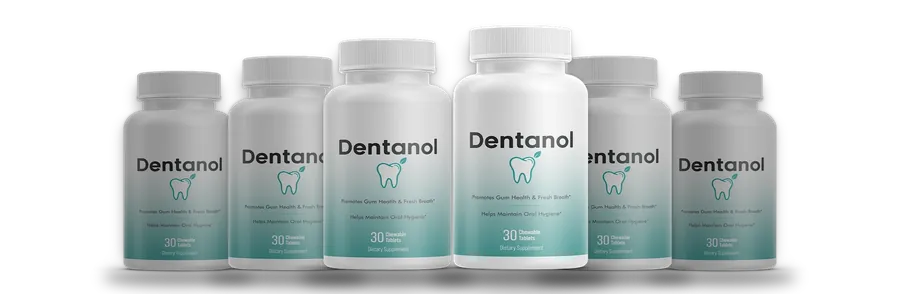
Benefits
The five Dentanol claims word for word, what each one means, and how to test them inside the refund window.
Read more
Side effects
Why Dentanol's safety profile is unknown, who should ask first, and the signs that mean stop and call someone.
Read moreU.S. stocking partner for Dentanol
Ready to try Dentanol with the 60-day guarantee?
Order through the stocking partner's page so your order ID is on file with the refund desk. 1 bottle is $69 plus $9.99 shipping; the 6-bottle pack works out to $49 a bottle.
Questions before you buy? Call +1 (302) 200-3480. 60-day money-back guarantee, return shipping paid by the buyer.